Decision Tree Software Engineering Ppt
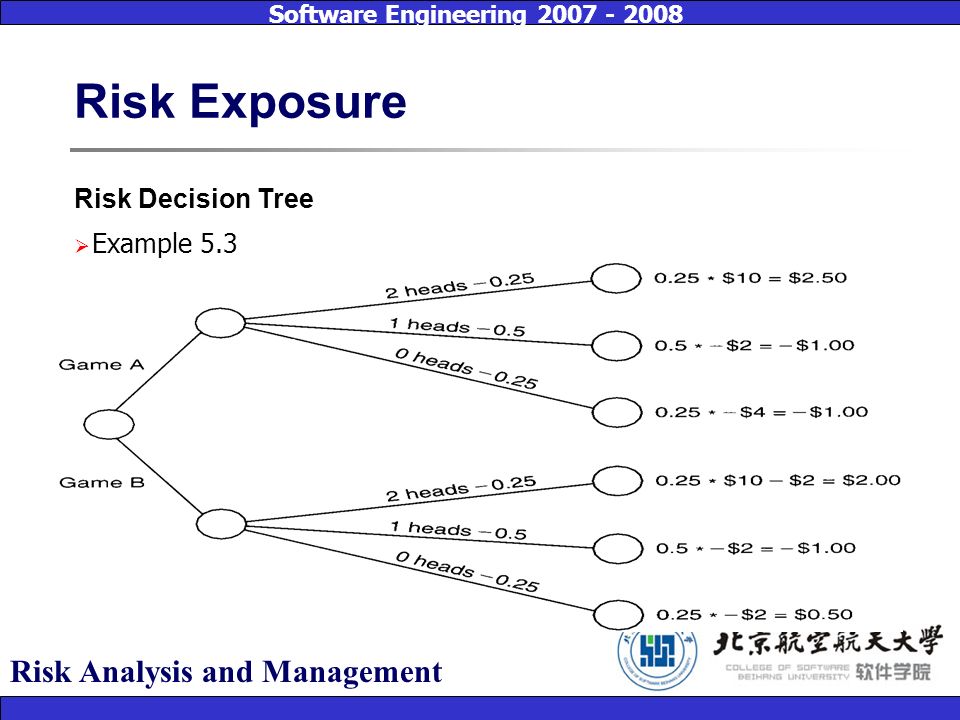

As one of the South's most innovative institutions in teaching and learning, Kennesaw State University offers undergraduate, graduate and doctoral degrees across two. Sep 24, 2017. US Military Abbreviations, Acronyms, Terms and Organizations, US Military Ranks. Decision Tree And Decision Table In Software Engineering Ppt' title='Decision Tree And Decision Table In Software Engineering Ppt' />Turnitin Technology to Improve Student Writing. Easily provide feedback, assess work,. Decision Tree. Σ (path probability)i x (estimated path cost)i. Expected cost = Outsourcing. Acquisition of software (or components) from a source outside the organization; Software engineering activities are contracted to a third party who does the work at lower cost and (hopefully) at higher quality; Software work within the.
Decision Tree Definition A decision tree is a graphical representation of possible solutions to a decision based on certain conditions. It's called a decision tree because it starts with a single box (or root), which then branches off into a number of solutions, just like a tree. Decision trees are helpful, not only because they are graphics that help you 'see' what you are thinking, but also because making a decision tree requires a systematic, documented thought process. Often, the biggest limitation of our decision making is that we can only select from the known alternatives.
Decision trees help formalize the brainstorming process so we can identify more potential solutions. Decision Tree Example Applied in real life, decision trees can be very complex and end up including pages of options. But, regardless of the complexity, decision trees are all based on the same principles.
Here is a basic example of a decision tree: You are making your weekend plans and find out that your parents might come to town. You'd like to have plans in place, but there are a few unknown factors that will determine what you can, and can't, do.
Time for a decision tree. First, you draw your decision box. This is the box that includes the event that starts your decision tree.
In this case it is your parents coming to town. Out of that box, you have a branch for each possible outcome.
In our example, it's easy: yes or no - either your parents come or they don't. Your parents love the movies, so if they come to town, you'll go to the cinema. Since the goal of the decision tree is to decide your weekend plans, you have an answer. Ampeg Svt 15t Manual High School here. But, what about if your parents don't come to town?
We can go back up to the 'no branch' from the decision box and finish our decision tree. If your parents don't come to town, you need to decide what you are going to do. As you think of options, you realize the weather is an important factor.
Weather becomes your next box. Since it's spring time, you know it will either be rainy, sunny, or windy. Those three possibilities become your branches. If it's sunny or rainy, you know what you'll do - play tennis or stay in, respectively. But, what if it's windy? If it's windy, you want to get out of the house, but you probably won't be able to play tennis.
You could either go to the movies or go shopping. What will determine if you go shopping or go see a movie? Your 'windy' branch hits another box - the money factor.
You decide there are two possibilities with the money - either you'll be rich or poor, depending on this week's paycheck and work schedule. If you get a good paycheck, you'll go shopping. If you don't, it's time for the movies. With a decision tree, your weekend plans are made, even though there are a number of factors that could impact your plans. Because you've thought through those situations, you have a plan for every combination of your paycheck, the weather, and the visit by your parents. Lesson Summary Decision trees are useful management tools that help formalize your thought process and provide a graphical representation of how different factors may influence your plans. They clearly lay out potential paths from the decision to all possible results, so that the cost and benefit of each path can be considered.
Decision trees are an excellent component of your decision making toolkit, and just like with other decision making tools, should be used in conjunction with common sense - not in place of it. Decision Tree: Vocabulary A decision tree • Decision tree: a graphical representation of possible solutions to a decision based on certain conditions • Contains a root (the first box) and several branches containing possible solutions • Useful for examining all possible results and weighing pros and cons in the decision making process Learning Outcomes After this lesson is over, students should be able to define what a decision tree is and describe how it can be used to make decisions.